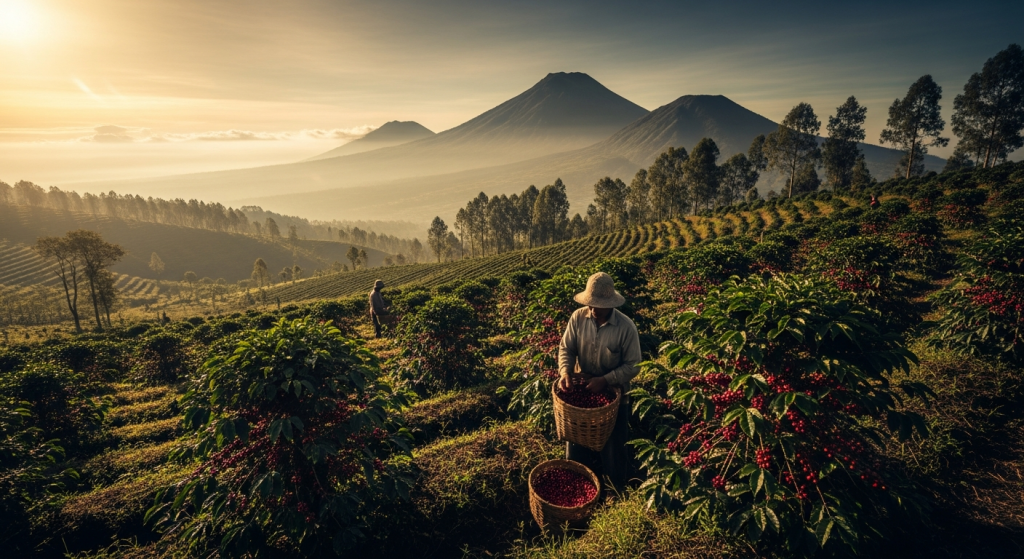
The highland air carries the scent of ripening cherries. Sunlight drenches volcanic slopes, signaling the annual rhythm of Bali’s coffee harvest, a precise cycle dictated by climate and centuries of cultivation.
Understanding Bali’s Coffee Calendar: The Dry Season Dominance
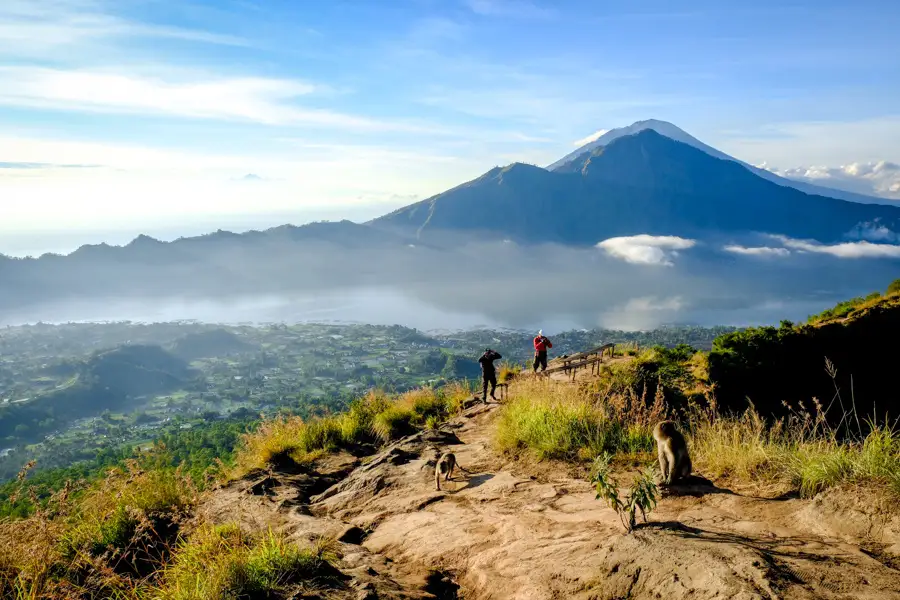
The heartbeat of Bali’s specialty coffee production aligns directly with the island’s distinct dry season, a period extending from May to September. This is when the majority of Arabica coffee cherries, particularly from the renowned Kintamani plateau, reach their peak ripeness. Farmers monitor their trees daily, observing the transformation from green fruit to a deep, lustrous red, indicating optimal sugar content and flavor development. The Kintamani region, situated on the volcanic slopes of Mount Batur, benefits from altitudes ranging between 1,200 and 1,600 meters above sea level. This elevation, coupled with rich volcanic Andosol soils, is crucial for cultivating the complex acidity and citrus notes characteristic of Bali coffee beans. The dry season provides consistent sunlight and minimal rainfall, conditions essential for slow, even maturation of the coffee cherries. Annual rainfall during the dry months typically drops below 100mm, a stark contrast to the wet season’s deluge. This consistency allows for predictable harvesting schedules and minimizes the risks associated with moisture during the critical drying phase. Many farms in Kintamani operate under the traditional Subak Abian irrigation system, a democratic and ecological water management practice recognized by UNESCO. This system, integral to Bali’s agricultural heritage, ensures sustainable cultivation practices that contribute to the unique terroir of the beans. The careful timing of the harvest ensures that the cherries are picked at their prime, a fundamental step in producing the high-quality specialty coffee sought by international roasteries in markets like DE, US, EU, AU, JP, and KR.
Kintamani Arabica: Peak Performance and Seasonal Nuances
Kintamani Arabica stands as the flagship offering among Bali’s coffee exports, officially recognized with a Geographical Indication (GI) in 2008. The peak harvest for these exceptional beans typically commences in May, gaining momentum through June and July, and often concluding by late September. During these months, the Kintamani plateau becomes a hive of activity, as local farmers, often working within family cooperatives, meticulously hand-pick only the perfectly ripe red cherries. This selective process is paramount for achieving the consistent quality demanded by specialty coffee importers. The average farm size in Bali is relatively small, often less than two hectares, allowing for this intensive, quality-focused labor. Post-harvest, the preferred processing method in Kintamani is often a fully washed or semi-washed (wet-hulled, or Giling Basah) approach, which benefits immensely from the dry season’s stable weather. Consistent sun exposure during the drying stages is critical for achieving a uniform moisture content, ideally between 10% and 12%, for the green beans. This careful management prevents defects and preserves the distinct flavor profile – often notes of orange, brown sugar, and a clean finish. Importers planning their annual sourcing of Bali Kintamani Arabica should target green bean availability from July through November, allowing for processing, quality control, and export logistics. Understanding this precise window provides a significant advantage for securing the freshest, highest-grade beans directly from the source. The Kintamani region alone accounts for over 70% of Bali’s total coffee production, making its seasonal rhythm the primary driver for the island’s export market. For more detailed information on the region’s unique agricultural practices, refer to the Kintamani Wikipedia page.
Beyond Kintamani: Pupuan, Munduk, and Tampaksiring’s Micro-Lot Windows
While Kintamani dominates the conversation surrounding Bali coffee, other highland regions present distinct microclimates and offer unique micro-lot opportunities for discerning importers. These areas often exhibit slight variations in their harvest timing, providing extended windows for sourcing exceptional Bali Arabica coffee beans. In Pupuan, located in West Bali, the harvest typically mirrors Kintamani but can sometimes extend into October due to slightly different rainfall patterns and elevation. Pupuan’s coffee farms, often situated on terraced slopes, benefit from a unique blend of volcanic and alluvial soils. Although Pupuan is historically known for some Robusta cultivation, the focus for specialty buyers remains on its high-quality Arabica micro-lots. Further north, in Munduk, the cooler, wetter microclimate often shifts the harvest slightly later, with peak picking sometimes occurring from June through October. Munduk’s higher humidity levels require careful management during the drying process, often utilizing raised beds and controlled environments to achieve optimal moisture content. The resulting beans from Munduk often present a different cup profile, sometimes with earthier notes and a more pronounced body, reflecting the unique environmental conditions. Tampaksiring, a region nestled in central Bali, offers smaller, highly specific micro-lots. Its harvest generally aligns with Kintamani, but certain micro-lots, due to specific varietals or localized microclimates, can have extended availability into November. These smaller, often family-run farms, focus on meticulously processed specialty beans, making them ideal for roasteries seeking unique, traceable offerings. Across these regions, the commitment to quality remains constant, with farmers focusing on sustainable practices and direct trade relationships to ensure the integrity of their product.

Navigating the Monsoon: Impacts on Quality and Availability
Bali’s monsoon season, generally spanning from October to April, introduces significant challenges and distinct considerations for coffee production. While the dry season ensures optimal conditions, the wet months bring heavy rainfall, often exceeding 200mm per month, and increased humidity. This shift directly impacts coffee cherry maturation and, critically, the post-harvest processing. Cherries ripening during the early parts of the monsoon (October-November) can be susceptible to excessive moisture, which may lead to slower drying times and a higher risk of defects if not managed meticulously. The Giling Basah (wet-hulled) processing method, prevalent in Indonesia, helps mitigate some of these challenges by partially drying the parchment coffee before hulling, but consistent sun is still preferred for the final drying stages. For specialty roasteries, sourcing during the peak dry season harvest (May-September) is always recommended for the most consistent quality. However, “hidden windows” exist for specific micro-lots that might have later-ripening varietals or are located in microclimates that experience slightly different weather patterns. These late-season harvests, sometimes extending into November or early December, require even more vigilant processing and drying techniques. Buyers must work with trusted partners who possess the infrastructure and expertise to manage coffee quality during these more challenging periods. Understanding the monsoon’s influence allows importers to make informed decisions, prioritizing beans harvested and processed during optimal conditions. For a broader understanding of Indonesia’s climate, including Bali’s monsoon patterns, consult Indonesia.travel’s climate information.
The Post-Harvest Cycle: Processing, Export, and B2B Readiness
The journey of Bali coffee beans from cherry to export-ready green bean is a meticulous process, directly influenced by the harvest season and vital for B2B importers. Once the red cherries are picked, they undergo immediate processing. While some farms employ fully washed methods, the semi-washed or wet-hulled (Giling Basah) technique is common, especially in Indonesia. In this method, coffee cherries are de-pulped, fermented for a short period, washed, and then partially dried to about 30-40% moisture content before the parchment is removed. The final drying, crucial for achieving the ideal 10-12% moisture content for specialty green beans, is where the dry season’s consistent sunlight proves invaluable. This entire process, from cherry picking to export-ready green bean, typically takes 6-8 weeks. Therefore, beans harvested in May are generally ready for export by July, and those picked in September are available by November. This timeline is critical for international coffee importers and specialty roasteries in DE, US, EU, AU, JP, and KR, who plan their inventory and forward contracts months in advance. Our commitment to direct trade ensures transparency and traceability from farm to port. We work directly with farmer cooperatives, many of whom are targeting organic certification by 2026, further enhancing the value proposition of our Bali coffee beans. This direct relationship also facilitates pre-orders and forward contracts, allowing buyers to secure their desired volume and quality from specific micro-lots well before the beans even leave Bali.
Direct Trade & Future Outlook: Securing Your Supply
For international coffee importers and specialty roasteries, understanding the seasonal rhythm of Bali coffee is not merely an academic exercise; it is fundamental to securing a consistent supply of exceptional quality. Our direct trade model emphasizes transparency and long-term partnerships with farmer cooperatives across Kintamani, Pupuan, Munduk, and Tampaksiring. This approach allows us to offer detailed information on specific micro-lots, processing methods, and precise harvest dates, ensuring complete traceability for every shipment. We actively work towards certifications, with many of our partner farms pursuing Fair Trade Certified status and a collective goal for widespread organic certification by 2026. This commitment aligns with the growing global demand for ethically sourced and sustainably produced specialty coffee. The annual B2B sourcing window, particularly from July to November, represents the optimal period to engage for the freshest, highest-grade Bali Arabica. Planning ahead, often with forward contracts, is key to accessing specific micro-lots and ensuring your roastery receives the desired flavor profiles. The global specialty coffee market continues to expand, with an estimated 10-15% year-on-year growth in demand for unique origins like Bali. By understanding the insider knowledge of Bali’s coffee seasons, importers can strategically position themselves to capitalize on these trends, building robust supply chains that deliver consistent quality and support sustainable practices at origin.
Understanding the precise seasonality and micro-climatic nuances of Bali’s coffee highlands offers a significant advantage for international coffee importers and specialty roasteries. By aligning your sourcing strategy with Bali’s natural harvest cycles and our direct trade capabilities, you secure access to the freshest, most vibrant Bali coffee beans. Explore our offerings and connect with our team to discuss your specific sourcing needs and establish a direct partnership for premium Bali Arabica.