Kintamani Coffee Tour vs. Ubud: Which is Better for You?
- Authenticity: Kintamani offers direct-from-farmer interactions, while Ubud provides polished, café-centric experiences.
- Focus: Kintamani is about agriculture and origin; Ubud is about consumption and lifestyle.
- Logistics: Kintamani requires a dedicated day trip, whereas Ubud’s coffee scene is walkable and central.
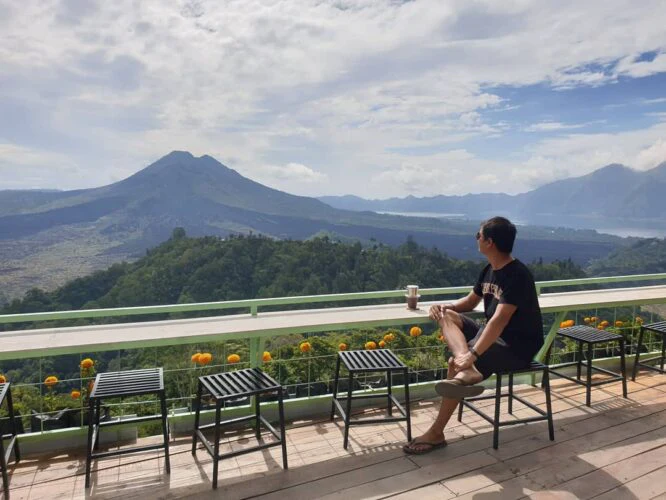
The air shifts. One moment, it’s the thick, frangipani-scented humidity of the coast; the next, it’s a cool, crisp mountain breeze carrying the scent of wet volcanic earth and distant woodsmoke. You’re climbing, leaving the beaches behind, heading for the heart of Bali’s coffee country. A ceramic cup, weighty and warm, is placed in your hands. Through the steam, a vista unfolds—either the dramatic caldera of a live volcano or the impossibly green tiers of a rice paddy. This is the moment of choice for any serious coffee lover in Bali, the fork in the road that defines your entire caffeinated journey. Do you ascend to the highlands of Kintamani for the raw, unadulterated source, or do you immerse yourself in the curated, cultural hub of Ubud? As a travel editor who has spent more than a decade exploring Indonesia’s archipelago, I’ve learned the answer depends entirely on what you seek from your cup.
The Terroir of Kintamani: A Purist’s Pilgrimage
To understand Kintamani coffee, one must first understand the ground it comes from. This isn’t just agriculture; it’s a conversation with a volcano. The entire Kintamani highland region sits on the vast caldera of Mount Batur, an active volcano whose periodic eruptions over millennia have blessed the area with incredibly fertile, mineral-rich soil. This is the foundation of the coffee’s unique flavor profile. We are talking about elevations between 1,100 and 1,600 meters above sea level, a critical factor for growing high-quality Arabica beans. The cool mountain climate slows the cherry’s maturation, allowing for the development of more complex sugars and acids. The result is a coffee that is worlds away from the robusta grown in Bali’s lower elevations. A well-processed Kintamani Arabica yields a cup with a bright, clean acidity, often with distinct notes of lemon, orange peel, and a lingering floral sweetness. It has a medium body and very little of the earthy bitterness some associate with Indonesian coffees. It’s a profile that has earned it Geographical Indication (GI) status, a legal protection initiated in 2008 to certify its origin and quality. When you visit a farm here, you are not just seeing a crop; you are witnessing a unique geological and agricultural phenomenon. The farming practices themselves are deeply traditional, often intertwined with the UNESCO-recognized Subak irrigation system, a community-based water management philosophy that has governed Balinese agriculture for over 1,000 years. This is a journey for the aficionado who wants to smell the soil, speak with the farmer who tended the trees, and understand the “why” behind every sip.
Ubud’s Coffee Scene: A Cultural Infusion
If Kintamani is the raw source, Ubud is the polished final product, presented with artistic flair. Ubud’s relationship with coffee is less about agriculture and more about culture. The town, long known as Bali’s spiritual and artistic heart, has seamlessly woven the third-wave coffee movement into its fabric of yoga studios, art galleries, and organic restaurants. The explosion of specialty coffee shops here began in the early 2010s, transforming the town from a place you might find a passable “Bali Kopi” to a destination with some of the best roasters in Southeast Asia. A coffee tour in Ubud is not a single destination but a curated crawl. You might start your morning at Seniman Coffee Studio, a place I’ve frequented for years, where they treat coffee like a science, serving their brews on custom-made recycled wood paddles with a small glass of water and a traditional cookie. Here, the focus is on deconstruction and education. A few streets away, you could find yourself at Ganesha Ek Sanskriti, where the experience is about pairing Indonesian single-origins with fine Indian cuisine. The baristas in Ubud are career professionals, many having competed in national and international championships. They can discuss extraction theory, grind size, and water temperature with an almost academic fervor. The beans they use are often from Kintamani, yes, but also from Flores, Sumatra, and Java, giving you a tour of the entire Indonesian archipelago in a single afternoon. The experience is comfortable, air-conditioned, and intellectually stimulating. It is the perfect choice for the traveler who appreciates the finer points of coffee but prefers to experience it within a sophisticated, cosmopolitan context. This is coffee as a component of a luxury lifestyle, not as a raw agricultural commodity.
Authenticity and Agrotourism: A Tale of Two Experiences
The word “authentic” is perhaps the most overused and misunderstood in travel. In the context of the kintamani coffee tour vs ubud debate, it requires careful definition. In Kintamani, authenticity means witnessing the unvarnished process. You will likely be hosted by a farming family on their own land, a small plot of maybe one or two hectares. The tour might be as simple as walking through the coffee trees, seeing the red cherries being picked during harvest season (typically May to October), and observing the wet-hulling process, or “Giling Basah,” that gives many Indonesian coffees their distinctive character. The tasting is often done on a simple porch overlooking the valley. This is where you can truly into the specifics of the crop, a topic we cover in depth in The Definitive Bali Coffee Beans Guide. Conversely, the areas surrounding Ubud are dotted with numerous “agrotourism” plantations. These are often larger, more commercial operations designed specifically for tourists. While educational, they can feel staged. Many offer free tasting flights of a dozen or more teas and flavored coffees, a practice that can be a red flag. The main event at these locations is often the Kopi Luwak, or civet coffee. While a fascinating part of coffee lore, the industry is fraught with ethical concerns about the treatment of the civets. In these tourist-focused plantations, the animals are almost always caged. In Kintamani, while some farms have also commercialized Kopi Luwak, you have a better chance of finding producers who harvest the beans from wild civets, a far more ethical (and rare) practice. The Ubud-area plantations offer convenience and a polished presentation; Kintamani offers a more direct, unfiltered connection to the land and its people, for better or worse.
Logistics and Accessibility: Planning Your Journey
Practical considerations are paramount when deciding between these two distinct experiences. Ubud is, for most visitors, a central and easily accessible base. Its coffee shops are concentrated within a few square kilometers, making a self-guided walking tour not only possible but pleasant. You can spend a full day exploring on foot, moving from one world-class café to another. Kintamani, however, is a destination that requires commitment. Located in the northeastern part of Bali, it is a significant drive from the main tourist centers. From Ubud, the journey is approximately 45 kilometers and can take anywhere from 90 minutes to two hours, depending on the island’s notoriously unpredictable traffic. From Seminyak or Canggu, you can expect a drive of at least 2.5 hours each way. This makes a Kintamani coffee tour a full-day excursion. You cannot simply pop in for an hour. A private driver is essential, and while not exorbitant, it is a necessary expense. A full-day (8-10 hours) car and driver charter typically costs between IDR 600,000 and IDR 800,000. For a more detailed breakdown of these and other travel expenses, our Bali Coffee Beans Pricing & Cost Guide is an invaluable resource. The roads leading into the highlands are winding and can be challenging for the uninitiated. The reward is, of course, the dramatic change in scenery and the exclusivity of the experience. But for travelers on a tight schedule or those who prefer a less demanding itinerary, Ubud’s accessible and concentrated coffee culture is the far more practical choice.
Beyond the Bean: What Else to Do in Each Region
Your choice of coffee tour should also complement your wider travel interests, as each region offers a vastly different set of ancillary activities. A trip to Kintamani is invariably a trip to see Mount Batur. The view from Penelokan, the main viewpoint, is one of Bali’s most iconic: the shimmering expanse of Lake Batur inside the ancient caldera, with the active cone of the volcano rising from its center. Many visitors combine a coffee plantation visit with a pre-dawn trek up Mount Batur to watch the sunrise, one of the island’s most popular adventures. According to the official Indonesian tourism board, this trek is a highlight for active travelers. Afterward, you can soothe your muscles at the Toya Devasya Hot Springs on the shore of the lake. The entire region feels wilder, more elemental. Ubud, by contrast, is a hub of curated experiences. After your coffee tasting, you can visit the Sacred Monkey Forest Sanctuary, wander through the stalls of the Ubud Art Market, or visit magnificent temples like Goa Gajah (Elephant Cave). The town is a global center for wellness, with countless yoga schools, meditation centers, and vegan restaurants. The culinary scene is exceptional, ranging from traditional warungs serving Babi Guling (suckling pig) to high-end gastronomic destinations like Locavore, which has been on Asia’s 50 Best Restaurants list for years. A day in Ubud is about cultural immersion, art, and self-care. A day in Kintamani is about nature, adventure, and geology. Your preference between these two distinct palettes of activities should heavily influence your decision.
Quick FAQ: Kintamani vs. Ubud Coffee Tours
Is it possible to visit both Kintamani and Ubud’s coffee scenes in one day?
While technically possible with a private driver and a very early start (around 6:00 AM), it is not recommended. You would be rushing through both experiences. A Kintamani tour deserves at least 5-6 hours including travel, and exploring Ubud’s cafes properly takes a full afternoon. It is far better to dedicate a separate day to each to fully appreciate what they offer.
Which location is better for tasting ethical Kopi Luwak?
This is a complex issue. Frankly, I advise travelers to be skeptical of any Kopi Luwak operation. However, your chances of finding a more ethical, “wild-sourced” product are higher in Kintamani, where you can speak directly with smallholder farmers. The large-scale tourist plantations near Ubud almost universally rely on caged civets. Always ask to see the living conditions of the animals before purchasing.
Do I need to book a coffee tour in advance?
For Ubud, no booking is needed; you can simply walk into any café. For Kintamani, it is highly advisable. While you can hire a driver and ask them to take you to a plantation, you will have a much more insightful experience if you arrange your private coffee journey through a specialized service that works with specific, high-quality, family-run farms. This ensures you are not taken to a generic tourist trap.
What is the price difference between the two experiences?
An Ubud coffee experience can be as cheap as the price of a few cups of coffee (IDR 40,000-60,000 per cup). A dedicated Kintamani tour is more of an investment, factoring in the full-day driver (IDR 600,000-800,000) and any tour or tasting fees at the farm itself, which can range from IDR 150,000 to IDR 500,000 per person depending on the exclusivity.
Ultimately, the “better” tour is a reflection of your travel philosophy. Are you a documentarian, seeking the unedited story of a coffee bean from soil to sip? Then the rugged, rewarding journey to Kintamani is your calling. Or are you a curator, someone who delights in the art of presentation and the fusion of global trends with local culture? In that case, the vibrant, accessible café scene of Ubud will be your paradise. The beautiful truth is that on an island as rich as Bali, there is no wrong answer. At Bali Coffee Beans, we believe the most luxurious journey is one that is perfectly tailored to you. Whether it’s arranging a private meeting with a fourth-generation farmer on the slopes of Mount Batur or curating a walking tour of Ubud’s most innovative roasters, we are here to craft your perfect coffee narrative.