How to Choose an Ethical Luwak Coffee Experience in Bali
- A strict “no cages” policy, with coffee harvested from the forest floor.
- A focus on education about the entire coffee process, not just the civet.
- Transparent sourcing methods that support local farmer communities and conservation.
The air in the Balinese highlands hangs thick and sweet, a complex perfume of damp volcanic earth, frangipani blossoms, and the distant smoke from a kretek cigarette. It’s just after dawn, and the jungle is a chorus of unseen life. Somewhere in the dense undergrowth of a coffee plantation, a notoriously shy creature, the Asian palm civet, has finished its nocturnal feast. This is the origin point of Kopi Luwak, a coffee born not of human hands, but of a wild animal’s discerning palate. It’s a compelling narrative, one that has lured travelers for decades. Yet, as you navigate the winding roads north of Ubud, a more complicated reality presents itself—one where the traveler’s choice directly impacts the line between natural wonder and animal cruelty.
The Luwak Paradox: From Forest Floor to Gilded Cage
The story of Kopi Luwak is steeped in the island’s colonial history. During the 19th century, under the Dutch Cultivation System, indigenous farmers were prohibited from harvesting coffee cherries for their own use from the sprawling plantations they worked. According to local lore, they discovered that the Asian palm civet (Paradoxurus hermaphroditus) consumed the ripest, most flavorful cherries but passed the beans undigested. Farmers began collecting these droppings from the forest floor, cleaning and roasting the beans to create their own secret brew. This process of natural selection by the civet, combined with the enzymatic fermentation that occurs in its digestive tract, results in a coffee that is remarkably smooth, with low acidity and a uniquely rich aroma. For generations, this was a small-scale, found treasure. However, its ascent to global fame, with prices for wild beans fetching over $1,200 per kilogram, created a dark industrial shift. The demand for an ethical luwak coffee experience in bali has grown in response to this troubling trend.
The paradox is that the very process that made the coffee famous is now its greatest threat. The vast majority of luwak coffee produced today comes from civets held in captivity. In 2016, researchers from Oxford University and World Animal Protection found distressing conditions at nearly every tourist coffee plantation they assessed in Bali. Civets, which are solitary and nocturnal, were housed in barren, wire-floored cages, often measuring no more than 2×1.5 meters, suffering from stress, poor nutrition, and cage-induced psychosis. They are frequently force-fed a monotonous diet of coffee cherries, a far cry from their natural, varied intake of fruit and insects. This not only constitutes severe animal cruelty but also, as any coffee expert will attest, produces an inferior product devoid of the complexity that made it legendary in the first place.
Red Flags on the Plantation Trail: Identifying Unethical Practices
For the discerning traveler, navigating Bali’s coffee tourism landscape requires a vigilant eye. The beautiful settings and welcoming smiles can easily mask unethical operations. The most immediate and non-negotiable red flag is the presence of caged civets. Any plantation that keeps civets on display, whether for production, “education,” or as photo props, is participating in the cruel trade. Often, proprietors will claim the animals are “rescued” or are simply there for tourists to see, while the “real” coffee is sourced from the wild. This is almost always a deception. As I Wayan Suprana, an agronomist and advocate for sustainable farming in the Kintamani region, explained to me, “A truly wild operation has nothing to show you but the forest and the beans. The civet is a ghost; you don’t see it. The cage is a business model, not a conservation tool.”
Another clear warning sign is the opportunity to handle or take photos with a civet. These are naturally shy, nocturnal animals. A docile civet in the daytime is likely sick, distressed, or has been conditioned through duress. Furthermore, be wary of vague sourcing claims and suspiciously low prices. The labor involved in searching hectares of forest floor for a few grams of civet droppings is immense. A single cup of authentic, wild-collected Kopi Luwak will command a premium price, often between $35 and $80. If you see it advertised for under $10, you can be almost certain it’s a product of intensive cage farming. Our Bali Coffee Beans Pricing & Cost Guide explores the economics of authentic production, which helps illustrate why low prices are unsustainable for ethical producers. The industry is rife with mislabeling, with some estimates suggesting up to 80% of coffee sold as “Kopi Luwak” is either fake or from caged animals.
The Hallmarks of a Truly Ethical Luwak Coffee Experience in Bali
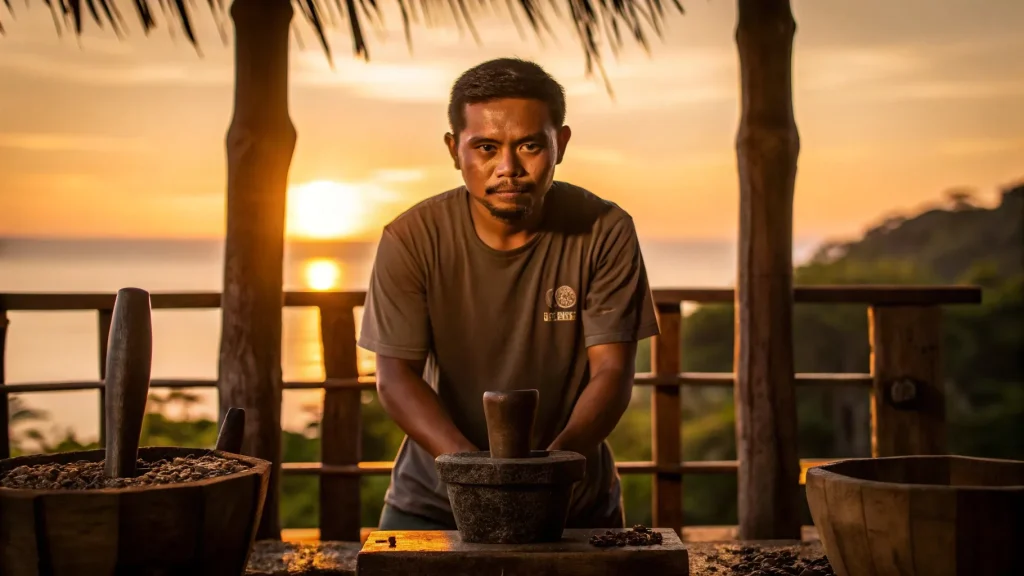
Finding a genuinely ethical producer is challenging, but not impossible. The key lies in shifting your focus from the animal to the environment and the community. A legitimate operation will proudly declare its coffee as “100% wild-sourced.” Their guides will not lead you to a cage but will speak at length about the local ecosystem, the civet’s role within it, and the farmers who are trained to sustainably harvest the droppings. They should be able to describe the collection process in detail—how local villagers patrol their own smallholdings in the early morning, collecting the precious scat before processing it by hand. This method provides a vital supplementary income for these communities, incentivizing them to protect the civets and their forest habitat.
Transparency is paramount. An ethical producer will be an open book, discussing the challenges of the industry and their commitment to animal welfare. The experience they offer will be educational, focusing on the entire coffee journey, from the volcanic soil and the unique Arabica and Robusta varietals grown on the island to the traditional wet-hulling processing method known as ‘Giling Basah’. This holistic approach is a core tenet of the island’s agricultural philosophy, intertwined with the Tri Hita Karana principle of harmony between humans, nature, and the divine, which is a foundation of the Balinese Subak irrigation system, a UNESCO World Heritage site. Look for producers who invest in their community and environment, perhaps through reforestation projects or by gaining broader certifications like Rainforest Alliance for their non-luwak coffee, which demonstrates a foundational commitment to sustainable practices. These are the operators providing a truly luxurious, guilt-free experience.
Beyond the Bean: Alternative Ethical Coffee Encounters
Perhaps the most ethical decision a traveler can make is to bypass Kopi Luwak entirely and immerse themselves in Bali’s wider, and arguably more interesting, specialty coffee culture. The island’s volcanic soil and high-altitude microclimates produce world-class beans that stand on their own merit, no civet required. The Kintamani highlands, for example, are renowned for their Arabica coffee, which was granted official Geographical Indication status in 2008. Grown alongside citrus fruits, the beans develop a distinctively bright, fruity flavor profile with low acidity that is celebrated by coffee aficionados globally. A visit to a traditional coffee cooperative in this region offers a far more authentic cultural exchange. Here, you can walk through the coffee gardens, learn about the Subak system firsthand, and witness the meticulous process of picking, pulping, fermenting, and sun-drying the beans.
This approach allows you to directly support local farmers and appreciate the craftsmanship that goes into every cup. Many small, family-run plantations, like those found around the village of Munduk in the north, offer intimate tours and tastings. These experiences are not about a novelty product but about a deep-rooted agricultural heritage. As a brand, we at bali coffeebeans believe that celebrating these diverse coffee profiles is the future of sustainable tourism on the island. By choosing a tour that focuses on Kintamani Arabica or Pupuan Robusta, you are investing in the island’s agricultural integrity and discovering a depth of flavor that tells a story of terroir, tradition, and the hard work of the Balinese people. It is a more direct and rewarding way to engage with the island’s celebrated coffee scene.
Vetting Your Tour: Questions to Ask Before You Book
To ensure you’re supporting a responsible operator, you must become an inquisitive traveler. The power lies in the questions you ask before you hand over any money. Whether you are speaking with a tour operator, a hotel concierge, or contacting a plantation directly, a few pointed inquiries can quickly separate the ethical from the exploitative. Start with the most direct question: “Are your civets wild or are they kept in cages?” There is no grey area here; the answer must be “100% wild.” Follow up by asking, “Can you describe exactly how the luwak droppings are collected?” A legitimate guide will enthusiastically detail the process of farmers foraging on the forest floor. A vague answer is a significant red flag. Another critical question is, “Do you offer any opportunities to see, touch, or take photos with civets?” The correct, ethical answer is a firm “no.”
Probe deeper into their business model. Ask, “What percentage of your coffee production is wild luwak versus conventional Bali coffee?” Ethical producers typically have a very small, limited output of Kopi Luwak, with the bulk of their business focused on their excellent, traditionally processed beans. An operation claiming to have a large, readily available supply of luwak coffee is almost certainly relying on caged animals to meet demand. Finally, inquire about their relationship with the local community: “How do you work with local farmers, and do they receive a fair price for the wild droppings they collect?” A truly sustainable enterprise is built on a foundation of fair trade and community empowerment. Being armed with these questions allows you to make an informed decision and book a Bali coffee beans experience that aligns with your values.
Quick FAQ on Your Ethical Luwak Coffee Experience in Bali
How much should real, ethical luwak coffee cost in Bali?
Authentic, wild-sourced Kopi Luwak is a rare luxury product. You should expect to pay between $35 and $80 for a single, properly prepared cup at a reputable plantation or high-end café. The raw beans can sell for upwards of $1,200 per kilogram. A dramatically lower price is the clearest indicator of a product sourced from caged, farmed civets.
Is there a reliable certification for ethical luwak coffee?
Unfortunately, there is no single, globally recognized certification specifically for “ethical” or “cage-free” Kopi Luwak at this time. This lack of a formal system places the responsibility squarely on the consumer to perform due diligence. Look for producers who are transparent and may hold other certifications like Rainforest Alliance or Fair Trade for their other coffee products, as this indicates a pre-existing ethical framework.
Can I really taste the difference between wild and farmed luwak coffee?
Yes. Coffee connoisseurs and professionals can discern a significant difference. A wild civet’s diet is diverse—it forages for the ripest coffee cherries, but also eats insects, small reptiles, and various jungle fruits like papayas and bananas. This varied diet contributes to a more complex, nuanced, and aromatic flavor profile in the final bean. Caged civets are typically fed a monotonous, often poor-quality diet of coffee cherries, resulting in a flatter, less dynamic, and sometimes unpleasant taste.
Which regions in Bali are best for authentic coffee tourism?
The central and northern highlands are the heart of Bali’s coffee country. The Kintamani region, on the slopes of the Mount Batur caldera, is famous for its Arabica. The area around Munduk and Pupuan in the north and west is also known for high-quality coffee production, offering a less-trafficked experience. According to Indonesia’s official tourism board, these regions are central to the island’s agritourism.
The allure of Kopi Luwak is undeniable, but its future depends entirely on the choices we make as travelers. By asking the right questions, seeking out transparent, community-focused producers, and even considering the rich world of non-luwak specialty coffees, you can do more than just taste a cup of coffee. You can actively participate in the preservation of Bali’s wildlife and its rich agricultural heritage. Your journey into the island’s coffee culture should be one that feels good, tastes exceptional, and leaves a positive impact. For a truly remarkable exploration of Balinese coffee, guided by these principles of ethics and quality, we invite you to discover the curated experiences offered by bali coffeebeans.